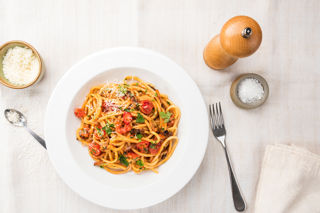
The ubiquitous word found in many Italian menus from north to south, comes from the French term ragôut and generally refers to every kind of long-cooked, meat-based sauce. The two main versions of authentic, proper ragù, though, are from Naples and Emilia-Romagna. Neapolitan ragù is a rich, intense red sauce obtained by the slow, extremely long simmering of tomato sauce with soffritto (the Italian version of mirepoix, made of finely chopped onion, parsley and celery), basil and big pieces of mixed meat which, once cooked, are served as a main course after pasta. A real symbol of Neapolitan cooking, ragù is the alternative to pasta alla Genovese for Sunday dinner. The Bolognese version uses finely chopped or even ground meat, a lesser quantity of tomato and onion and includes white or red wine. Sometimes lard, milk and offal is added, too. The result is a creamy or grainy pale red sauce usually used with fresh egg pasta such as tagliatelle or fettuccine.